Journey Mapping to Increase Free Trial Conversions
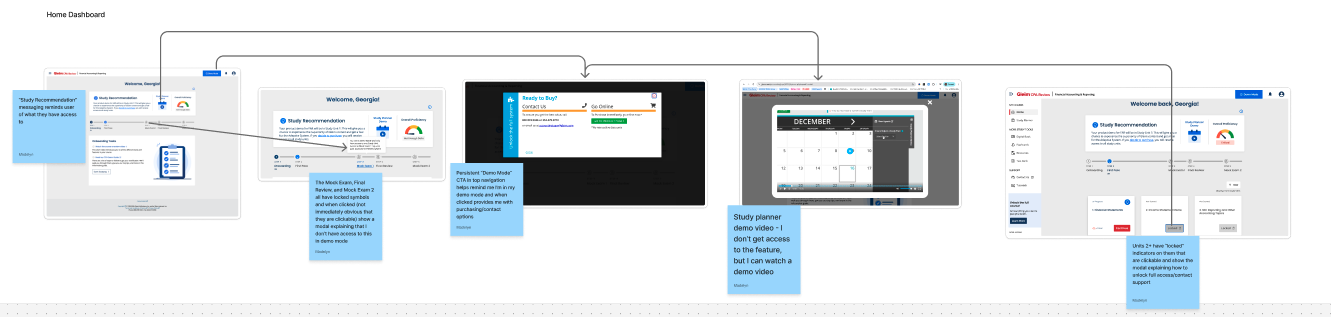
Example of user flow mapping of competitor site
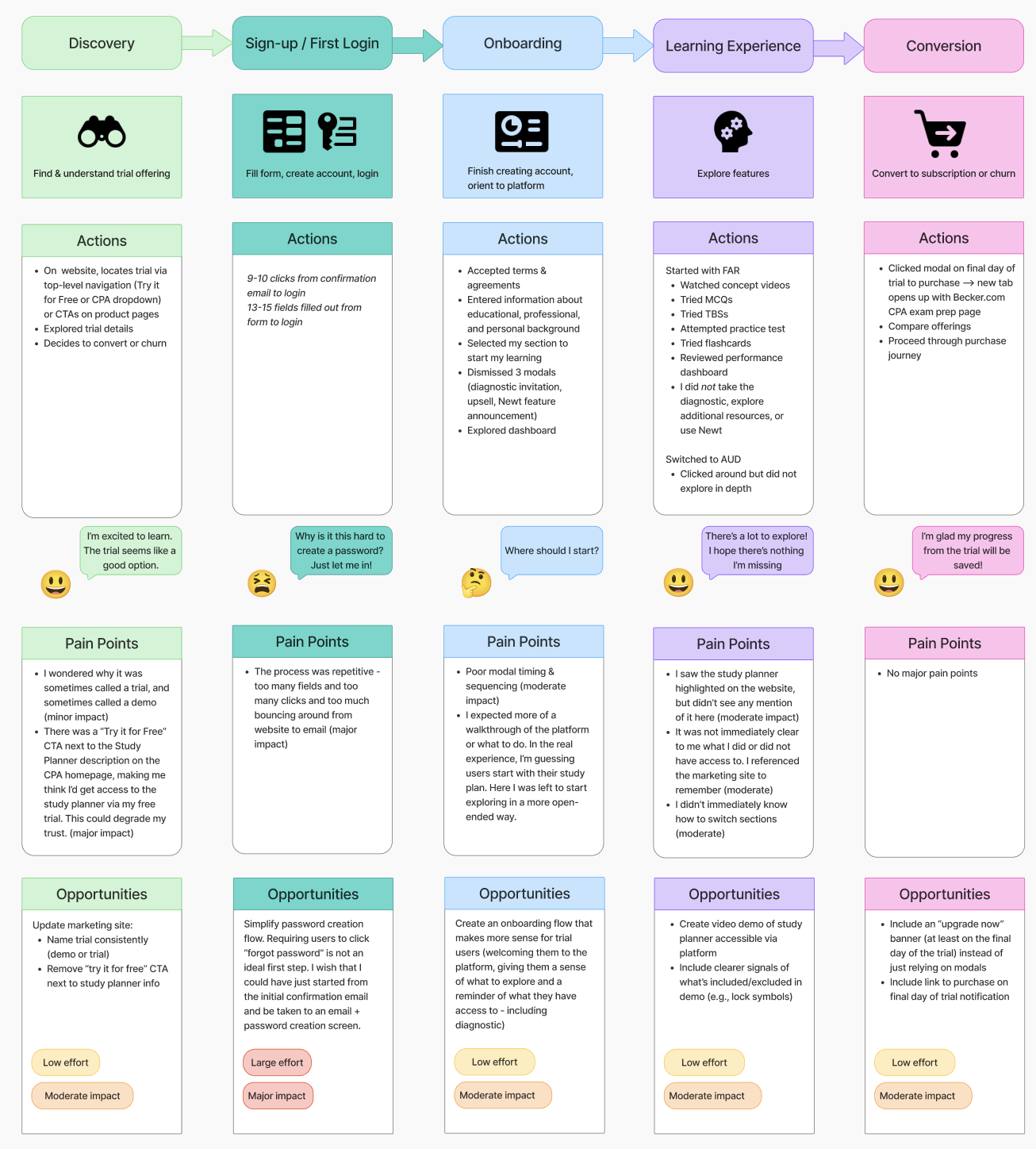
Example journey map
The Challenge
A leading provider of CPA exam preparation products offered a 14-day free trial of the learning experience. They knew that only 10% of students converted from the free trial to the full subscription each month and wanted to identify opportunities for increasing this rate. Raising conversions by a single percentage would lead to a yearly $400k revenue increase.
The product team wanted to know:
What does the process look and feel like, from sign-up to conversion?
How do users engage with the trial?
Where do trial users get stuck, face friction, or give up?
Where do trial users see value in the experience? Where does it fall short of expectations?
What makes someone convert (or not)?
Why do some users request the free trial and never log in?
By answering these questions, the team would have a better overall understanding of the user experience and be able to prioritize improvements to move the needle.
Approach
An end-to-end journey map of the user experience, from sign-up to the end of the 14-day trial. The team had little visibility into the full trial experience. As a researcher with little knowledge of the platform or trial experience, I went through the 14-day trial firsthand and documented the entire journey. Using a Figjam whiteboard, I captured screenshots of every step in the journey, including marketing emails and phone calls. I annotated screens with my questions, points of friction, and user experience evaluation. I summarized my experience in a more cohesive journey map.
Competitive analysis. I also documented the trial experience for the brand’s top two competitors, producing the same artifacts as described above, along with a comparison chart noting the strengths and weaknesses of each experience.
User interviews. To deepen our understanding of the trial user experience and validate/challenge hypotheses from the journey mapping exercise, I interviewed 4-5 users from 4 groups: those who had experienced the trial and converted, those who experienced the trial and did not convert, those who signed up but never logged in, and those who were in the middle of the trial.
Voice-of-customer survey. This research identified the need for an ongoing survey touchpoint. Using our findings, we were able to draft a survey to be managed by our Consumer Insights colleagues that would collect ongoing feedback from users about the free trial.
Impact
The product team gained a much deeper understanding of the free trial experience and walked away with a list of prioritized improvements, including efforts to minimize friction in the password setting process during account setup and improve onboarding experience within the platform to help users better understand how to take full advantage of their trial and really see the value of the learning experience.
Implementation is underway - tune back in for (hopefully) increased conversion rates!